Growing up in Jaffna

WEDNESDAY, NOVEMBER 10, 2010

POSTED BY 

WEDNESDAY, NOVEMBER 10, 2010
growing up in Jaffna
7 Nov 2010
Tellippalai is a small village in Jaffna, in North Sri Lanka. This is where I was born as the last child of my parents. My father Joel Paul belonged to Tellipppalai, but my mother, Petsy, moved in from South India, after their marriage in1933.


There were two main roads intersecting Tellippalai – the one that leads to KKS (Kankesanturai airport) and the other one leading to Mahajana College. Our house was situated along the Mahajana road. A long private road led to our gates. We had a sprawling garden in front on one side; and lots of coconut trees and a deep well, and the bathing room on the other side. I remember the smell of Jasmine creepers growing on iron arches in the pathway to our house. I also remember the verandah where my father sat on an easy chair at nights talking to the gardener or some visitor. His voice used to ring loud and clear in the silence of the night.


We had a large house, and each room was spacious. The heads of 2 deer adorned the main door. An oval mirror was placed just opposite to the door on the wall on which one sees himself as he walks in. The hall had a red cemented rectangular floor with a border around it. There was a piano which my mom played. And on which some of us children practiced our piano lessons. At the back of the hall was pappa’s office. a large table with his business papers and letters and a kerosene lamp, all neatly arranged. A typewriter sat on the side table. There was a small library too. The room was airy and sunny as it had no wall, but large windows overlooking the backyard with mango and guava trees. One could see also see the garage and the tall palmyrah trees behind. We would step ever so silently into pappa’s office –‘cos if anything was found missing later, he would shout at us. The dining room and the visitors ‘ room was on the right side next to the hall

We all slept in a huge room which had a very large bed and a smaller one. I can still feel my mom next to me and lots of pillows around. There used to be 2 cupboards which had all our clothes, and precious stuff, including my mom’s carpet from India, which was used at her wedding.

Pappa slept in the room before ours. We used the smaller rooms as wash rooms at nights because our main toilet was outside the house, and there was no electricity to light our paths. There were plenty of slithering snakes around too.. We had to pass the cowshed and the goats and walk on the tiles to reach the main toilet and hence this arrangement.


Kitchen section was separate. There were servant’s quarters too. One used firewood for fuel. We used mud pots and Aluminum or brass vessels to cook. Coconut shells with long sticks were the ladles.


We had good cutlery and crockery and entertained many white missionaries. I remember Samuel the cook who knew to make many exotic dishes that they liked. So custards, cakes and puddings were common at home.

Kerosene lamps were used at nights. There was a ”petrolmax light” too, which was used if we needed stronger light. Every evening at about five, we girls would clean the lamp tops with vim powder and paper… the soot came off easily with this. We would pour kerosene into the bottom small jar, turn up the wicks, trim them if needed and keep them ready to be lighted when it gets dark.

My older sister Leela mainly carried these lamps as they would break if dropped. Mom helped. We studied at the dining table. All homework was done under this light.

Saturdays were cleaning days. Bed linen was changed. Door knobs had to be polished using Brasso. My mother would give us stored coconut scrapings from which she had extracted milk every day for cooking. We had to use it to polish the floors. We would laugh, fight and polish the floor and get filthy. If we were tired then mom or Leela would take over..

We always had servants.. To cook, to clean.. But there were days when my mother single handedly broke leaves from the trees, or cut grass from our land beside the house to feed the goats and cows. I have also seen her milking the cows and goats. There were hens and cocks clucking all the time. We would feed them. We would catch the hens and cover them with a basket if they were laying eggs during that season. My mom’s favorite were parrots. She taught them to speak and they kept chattering all the time. They could scream HALLELUJAH!

Remember the moonlight and stars on those quiet blue black skies. white clouds floating.. we would sit on the long steps on the verandah and talk. Mom would tell us Bible stories. or teach us choruses. Leela was always around to talk to us. Padma my sister was sick very often as she had a heart disease. Rheumatic valvular disease. There was hardly any treatment then, only penicillin and digoxin.

Wesley my older brother was always at a boarding school and was not there most of the time when I was growing up.. But when he turned up we had a great time…Sam was 4 years older to me and he was my play companion. We would fight with each other like cats and dogs but also had fun playing. Some of our cousins of our age lived in the 4th house from ours and they would come over to play.

My father Joel Paul was a building contractor. Hailing from a backward caste he did not get to practice his profession as a teacher and hence took up building as his career. He made millions and was famous for his knowledge and skills. Along with his brother Samuel, he bagged all the coveted contracts. They built most of the schools, hospitals, libraries, light houses and the famous Town hall of Jaffna. My father had an explosive, hot temper and was quite arrogant, challenging everyone who crossed his path, especially if they were unjust or discriminated against people of backward caste. This isolated us all the more.

We were part of a larger family. My father’s brothers and sister lives in the lands accompanying ours. Most of them also had big houses and lands adjoining their houses. My mother was from Madurai, India, a doctor from the prestigious Christian medical college Vellore. She was careful to see that we did not mix up too much with the locals. We were taught to converse in English also… kept our house neat and stylish…Therefore we were envied by our other relatives.

Before sleep we always had family prayers. We beat the drum, played the cymbals and sang choruses and songs. One of us read the Bible and Mom would pray, after one of us say a short prayer. Many a time we kids would fall asleep also. Then we would dim the lamps and go to sleep. Pappa was often away in Colombo on work and then we had to manage by ourselves, with a watchman at nights as our security. My mother always checked under the beds to ensure no one was lurking under. It was scary to wake up at nights and see the shadows of the wick, dancing on the walls. I used to see the leaves on the Palmyrah trees when there was moonlight and imagine all kinds of shapes and figures. The dogs used to bark for every disturbance and this made us afraid too. But Mom’s unshakable faith in God kept us all strong.
She would tell us stories about her life in India, her work as doctors in the villages and this was a great inspiration to me. Her parents were evangelists and had a long period of service in Cumbum, Madras. They caste out evil spirits regularly as people used to come to them for prayer from remote corners of Tamilnadu and nearby states. Her father was a headmaster and married a Hindu convert who was an excellent pianist and a great cook of meat dishes although she was a Brahmin. These stories kept us mesmerized, and we would ask her for more and more when she talks about them. This also helped to build up our Christian faith

Christmas was a time of all kinds of exotic chocolates and food.. Home made cake was the rule and we merrily took part in beating the cake.. I can still smell the aroma of cake being baked… There were lots of toys too. Pappa would bring rolls of cloth and my mom would pour over design magazines and stitch clothes for us every Christmas and New Year. The poor and the people who worked with Pappa would visit us during this season and they were given cash and eatables. We would also carry a platter of sweets and cake to our relatives every Christmas.

Sundays were special. We would get into our best clothes and travel by car to the church in Jaffna town. It was a great time if Pappa was not in town. Otherwise we would always be quiet and nervous afraid that we would irritate him and make him angry. We attended the English service of the Assemblies of God. Sunday school was a time of great enjoyment where we would learn new choruses and draw and act. There were Danish missionaries then and we got the best from them. My mother enjoyed the services for it was only then that she met her equals in education and faith.

POSTED BY DR.DAISY PAUL DHARMARAJ AT 11:28 PM NO COMMENTS:
.DAISY PAUL DHARMARAJ AT 11:28 PMNO COMMENTS:  

Challenges faced by mummy -a committed Indian lady doctor – in Ceylon

Part One

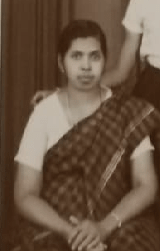
Aurelia Dhanamony Paul  

This is the life story of my mother. She was born in India in 1910 graduated in Medicine at CMC Vellore, and migrated to Sri Lanka after marriage. A dedicated woman, smart, caring, and  intelligent. But destiny had brought various twists in her life.

Childhood.

Aurelia Dhanamony was the first born for Sophie and J I Manickavasagam belonging to Cumbum, in Theni district, Madurai. Her father was a local convert . He had met Sophia in Madurai- she belonged to a Hindu Brahmin family – an accomplished woman; daughter of a high court lawyer. She was a believer in Christianity and fell in love with Isaac Manickavasagam. When they got married, Sophia was disowned by her family. Sophia and Isaac chose  to settle in Cumbum.

Aurelia pet-named Petcy, and was an obedient, quiet and religious girl. She was very good in her studies and was always a favorite of her teachers. Invariably the youngest in class she was smart and active. Her mother was a pianist and Petcy also learnt to play the piano.

Their’s was a large family.. Dorai, Jeya, Dhana, Victor were her younger brothers. Pankajam was the only sister. It was a happy family. Isaac was the Headmaster of the local school.  He also had a church, where he was the pastor. Sophie was a faithful wife, bringing up the family. She was a great cook, having learnt to make non vegetarian dishes as well.

Around this time Dr. Ida Scudder had started her medical school  in a place called Vellore near Katpadi. Petcy dreamt of becoming a doctor, and was encouraged by her parents.

Her friend and companion in the house was her aunt Tracy. She  was slender and  had very long hair .She used to correspond with Petcy regularly. Petcy’s younger sister Pankajam was mischievous and petted by everyone

She was also fond of her cousins James And Raj Isaac in Vellore. Petcy was a quiet and prayerful girl, good at studies and was everyone’s favorite.

In 1927, she was the youngest student accepted by Christian Medical College Vellore , in the Licentiate Medical Practitioner (LMP) course. Though for the first time she was far away from home, Petcy settled down to an exciting study period of 4 years. There she met another beautiful girl called Zeline Parker and became friends with her. Zeline was from Parker Home, an orphanage run by American missionaries. It was to be a lifelong friendship, which carried them through thick and thin. Zeline and Petcy always travelled together going home and returning to CMC.

As a doctor in Madurai

Petcy enjoyed her time in CMC. She loved medicine. She was happiest to care for her patients and interact with them.

On completing the course she joined Madurai mission hospital. She also worked in Cumbum, Theni, Bodinayakanur. She was the only lady doctor for miles around in those villages. Therefore night calls for deliveries were common. In the pitch dark, when there was no electricity she had delivered babies with the help only of lantern lights. She had tackled obstructed labour by craniotomy or decapitation. She often travelled by bullock carts with a helper, she served the people in those areas

She also worked in Kenneth Hospital Madurai.

Marriage

She was barely 21 and there was a missionary from Ceylon, who was looking for a bride like her for one Joel Paul who incidentally was a very rich man 44 years old, from Tellippalai Jaffna. He was a builder and contractor. He had married twice. The first wife died of tuberculosis. The second wife had mental illness and was divorced. He had no children. If Petcy were to marry Joel she will have a very comfortable home indeed and could support her brothers to study. Petcy’s parents were in a dilemma.  They were not rich , and could just make ends meet. There were 4 more siblings who needed to be educated. Mother Sophie was not well – she had bouts of asthma.

Joel was twice Petcy’s age and a widower and divorcee. Was this marriage essential at all?

Joel visited Petcy and was lavish with his gifts to everyone.  Petcy agreed to marry him. And so they did marry. For the first time Petcy left her beloved family behind in India and flew to Kankesanturai Jaffna in Ceylon.

Petcy in Tellippalai, Jaffna

Petcy started her life in Tellippalai. Everything was different. Tamil intonation and words were peculiar to Jaffna, and so even conversing with common people needed an effort. People were curious to see whom Joel married… a doctor from India. The house was in a huge campus and was large, Helpers were scarce and so Petcy had to work hard from morning till night to care for her husband and keep the house.  In the meantime she was trying to get herself employed. Ceylon medical council did not recognize her LMP degree. Hopes and dreams of career as a doctor crashed for this young woman. Joel refused to send her back to India for one year of study which would have qualified her with an MBBS degree, eligible to practice in Sri lanka. Aspirations of a medical missionary went flying through the air.. she was heartbroken.

In 1934 Wesley a son was born to her. Three years later Leela a bonny baby arrived, followed by Padma.  The Tamils in Jaffna looked down on Indian Tamils, because many Tamils from South India had migrated to the tea estates in Ceylon, recruited as laborers. This did not help Petcy who was scorned by Joel’s relatives and neighbors, despite the fact that she was a  doctor and much more educated than them. She was close to one sister in law, Jeeva wife of Daniel Paul. Jeeva was also from India. These two families were close to each other. Jeeva was also a pious lady like Petcy and hence this friendship thrived and helped both of them to cope in the tough circumstances.

By this time Joel was busy in Kandy, a hill town in Central province. He and his brother Samuel Paul were famous for their building skills and had won many accolades. They were sincere, hardworking skilled and principled, Lighthouses in Kankesanturai, Puttalam, Schools and colleges and hospitals in Jaffna, Colombo and Kandy were the handiwork of Joel and Samuel.

Joel became financially very comfortable. He had built 3 houses in Kandy near Kattugastota-  very attractive compact houses. But he had frequent attacks of malaria, which then was an epidemic in Ceylon. Petcy did not know anything about the financial aspects of the family. Money was not important to her and did not tempt her in any way.

Petcy went to live with Joel in Katugastota.  Joel’s nieces Gnanam, Chellamma  also lived with them. They were much older to us children, pursuing Teacher’s training course. Joel Petcy’s children Wesley, Padma and Leela joined the local schools.  Another child Raja was born here- and he grew up to be an intelligent affectionate kid. Petcy was a good housewife and loved her family.

One of the maids was from India, and she started a romantic relationship with a man next door. That man had a grudge against Joel, stemming from some business deals, and he tried to harm Joel through this girl. Twice she tried poisoning his food. Joel sent it for analysis and it was found to be Arsenic.  This attempt to murder Joel failed.  One  day, Raja was struggling for breath, and Joel’s niece found marbles in his mouth and removed hem-  was it an accident or was it a murder plot?

One sad day, Raja went missing. People ran helter skelter. The police arrived and investigated. It was a nightmare. Petcy’s heart was broken to bits. There were notices everywhere asking for whereabouts of this little boy. Two days later, they found Raja’s body washed ashore on the banks of Mahaweli ganga river.  An accident again? The coroner who examined the body and brain of Raja said that Sri Lanka has lost a great man- because of the convolutions in the brain.

A few weeks later, the maid  confessed to Petcy that it was she who had thrown Raja into the river. Petcy was stunned and was contemplating how to  tackle the situation as this maid was from India. That night the maid committed suicide, leaving a note about her relationship with the neighbor. At the autopsy she was found to be two months pregnant. Petcy and Joel  were  devastated realizing that their dear son was murdered by their maid.  Heartbroken, they managed to find solace in prayer.

Joel had a temper. He would flare up for trivial issues.  Many times if there was  less salt or too much salt in the curry, he would topple the table- crockery, cutlery and all. He threw plates around. He loved his wife and children but would rarely show affection openly. Communication between them dwindled so much so that Petcy was afraid to talk to him. This affected the children as well. They hardly spoke to the father. Whenever Joel returned home, the children who were happily playing till then, would run and hide themselves in the rooms.

Joel was facing financial difficulties and had to sell the 3 houses one by one. The family decided to return to Tellippalai Jaffna

A day in the life of Petcy (at Tellippalai)

She wakes up by 5 a.m. as the cock crows. Her first half an hour is spent talking to God. Her prayers were loud and intense, claiming God’ s promises. She prays for each and every family member. Then she goes to milk the cows. Not an easy job. She has to sit on a stool, talk to the cows as she draws the milk. She feeds the cows  with hay and water. In the ’40s and ’50s, maybe even now, Jaffna villages were infested with snakes, and she had to watch her every move, as well as the surroundings.

Then she makes coffee or tea for the children. Breakfast is either idiyappam or puttu or bread. For Idiyappam she had to pound soaked and dried  rice and – which she always kept in stock. Some of the maids around used to help her for a fee. Side dishes had to be made. Cooking was done with firewood and was not easy. There was a  vent pipe. Sometimes she made aappam – hoppers and these tasted yummy with coconut milk and sugar. In Sri Lanka  coconut was indispensible. Every meal had at least one dish made using coconut which needs to be scraped using a special gadget – another difficult task to do twice or thrice a day.

She sets the table for breakfast – This is always done very neatly. Plates, glasses, cups and saucers, water jug, dishes. Each child has to be coaxed to eat after morning ablutions. The table was cleared, in which task all of  the children participated. Cleaning of the house begins next. Bed making, sweeping, setting everything neat, bringing back the night lamps to where they belong. The verandahs need to be swept as leaves and branches would have littered the place.

Water has to be drawn from the well and poured through a pipe into the bathroom nearby and the tub in front, All vessels had to be filled as there was no running water. Vegetable lady and fish seller come home as the market was just a few yards ahead. They exchanged pleasantries before selling .

By the afternoon the all familiar bread man will come ringing the bell of his cycle. The smell of hot bread and the buns and the cakes was welcome by all children who will run to him. He will make a note of his sales in the notebook and collect payment later.

Clothes had to be washed by hand. Leela the elder daughter helpsed Petcy along with maids if there were any.  One gardener came daily to water the trees. Each tree had an area with a small entry which was open and later closed, as water flowed along the shallow mud canal from the well.

In the evenings when dusk was settling, Petcy and her daughters cleaned the glass of all the kerosene lamps, with vim powder and paper. A petrolmax light was lit to be kept in the verandah till we closed the doors. The kerosene lamps were carried to each room that was being used. Lunch and dinner had to be made daily, by Petcy who tirelessly toiled for her children. By 7.30 pm there were family prayers. Children took turns to beat the drums, play the tambourine and sing. After Bible reading Petcy always prayed. After dinner children retired to bed. Petcy would ensure all doors were locked in that lonely bungalow. She even looked under the beds for thieves.

The house was spic and span. Beds were made up with white bed sheets and pillow cases. Brass on the doors and tables always sparkled. Whoever visited the house was in admiration of the housekeeping of Petcy. In the mornings Petcy would get the children ready for school. Bright white uniforms and polished shoes were the norm. In the evenings homework was done with help from Petcy or the older children.

Plucking leaves for the animals at home also fell on Petcy’s shoulders. Children accompanied her as she did that. Feeding the animals with “penance” was done by her if the gardener was absent. Medical emergencies were attended at home- probably the only place where Petcy used her professional skills.

 continued

Aurelia Dhanamony Paul