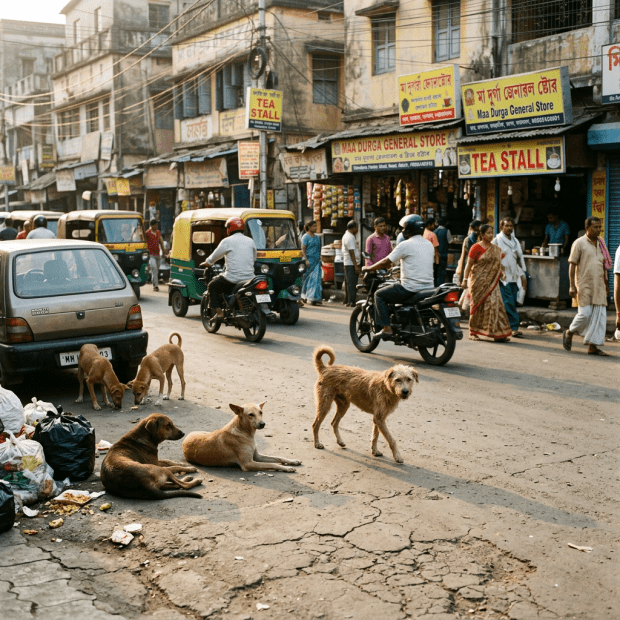
In recent months, many families across Tamil Nadu have become increasingly concerned by the growing number of dog bite incidents and rabies deaths reported in the news. According to the media, in just the first few months of 2026, lakhs of dog bite cases were recorded in the State. Behind every statistic lies a human story — a frightened child, an anxious parent, an elderly person hesitant to step outdoors, or a family moving from one hospital to another seeking treatment.
Conversations about stray dogs often become emotional and divided. Some people feel fearful and angry because of attacks in their neighbourhoods. Others feel compassion for animals that live hungry and neglected on the streets. Both reactions are understandable. Human safety is important, but kindness towards animals is also part of a humane society.
The stray dog problem did not arise overnight. It has gradually grown alongside rapid changes in our towns and cities. Overflowing garbage bins, exposed food waste, abandoned pets, and weak implementation of animal birth control programs have all contributed to the increase in stray dog populations. Dogs naturally gather where food is easily available, and many of our streets unintentionally provide that environment.
Local bodies are attempting to address the issue through sterilization surgeries and vaccination programs, but these efforts are often limited by shortages of staff, funding, and veterinary infrastructure. As a result, the scale of the problem frequently outpaces the available solutions.
For many people, the impact is now part of everyday life. Parents worry about children playing outdoors. Elderly people feel uneasy walking alone early in the morning or after dark. Delivery workers, sanitation workers, and street vendors regularly encounter aggressive dog packs while carrying out their work. Social media further amplifies public anxiety whenever disturbing videos or reports circulate widely.
Alongside public concern, there is also a need for greater awareness about rabies itself. Rabies is a painful and always fatal, but it is almost entirely preventable if treated early. After any dog or animal bite, immediate action is crucial. The wound should be washed thoroughly with soap and running water for several minutes, and medical care should be sought without delay. Anti-rabies vaccines are highly effective when given on time.
Unfortunately, many people still ignore small bites or scratches, especially when the animal appears healthy or familiar. Others discontinue treatment after the first injections because they begin to feel normal again. Such delays can have tragic consequences because once rabies symptoms appear, treatment becomes extremely difficult.
Children are particularly vulnerable because they may not understand the seriousness of a bite or may hide injuries from adults. This is why schools, families, and communities must actively create awareness about rabies prevention and safe behaviour around animals.
It is also important to remember that dogs are not the only animals capable of spreading rabies. In India, monkeys, cats, bats, foxes, jackals, and other infected animals can occasionally transmit the disease. Monkey bites in tourist areas and temple surroundings are becoming increasingly common in some places. At the same time, many people today notice monkeys appearing not only in villages near forests, but also in urban apartment complexes and residential areas. Shrinking habitats, easy access to food waste, and human feeding habits are gradually drawing wild animals closer to everyday human life. Any animal bite or scratch should therefore be taken seriously.
The solution to this growing challenge cannot come through fear or anger alone. Experience from many countries shows that simply removing or killing stray dogs does not solve the problem permanently. Unless garbage management improves and dog populations are controlled through vaccination and sterilization surgeries, new animals soon return to the same areas.
India needs a balanced, practical, and humane long-term approach. Public spaces must be kept cleaner, veterinary services strengthened, and sterilization surgeries programs expanded consistently. More dogs need to be vaccinated against rabies, and awareness programs should become part of school education and community health efforts.
Ordinary citizens also have an important role to play. Pet owners must vaccinate and sterilise their animals responsibly. People who feed stray dogs should do so thoughtfully while supporting vaccination and sterilization surgeries efforts wherever possible. Communities need to practise both compassion and caution.
Perhaps this issue also raises a deeper question about the kind of society we wish to become. A healthy society should be safe for children, respectful towards the elderly, compassionate towards animals, and responsible in maintaining public spaces. Human safety and kindness towards living creatures do not have to stand in opposition to each other.
Rabies deaths are especially painful because they are largely preventable. No child should lose life because a small bite was ignored. No family should live in constant fear because systems failed to function properly. With greater awareness, stronger public health measures, responsible citizenship, and humane long-term planning, India can significantly reduce both dog bites and rabies deaths.
The answer will not come through blame or hostility, but through awareness, cooperation, and shared responsibility.

